Sanctuary Guide
Lola ya Bonobo Sanctuary
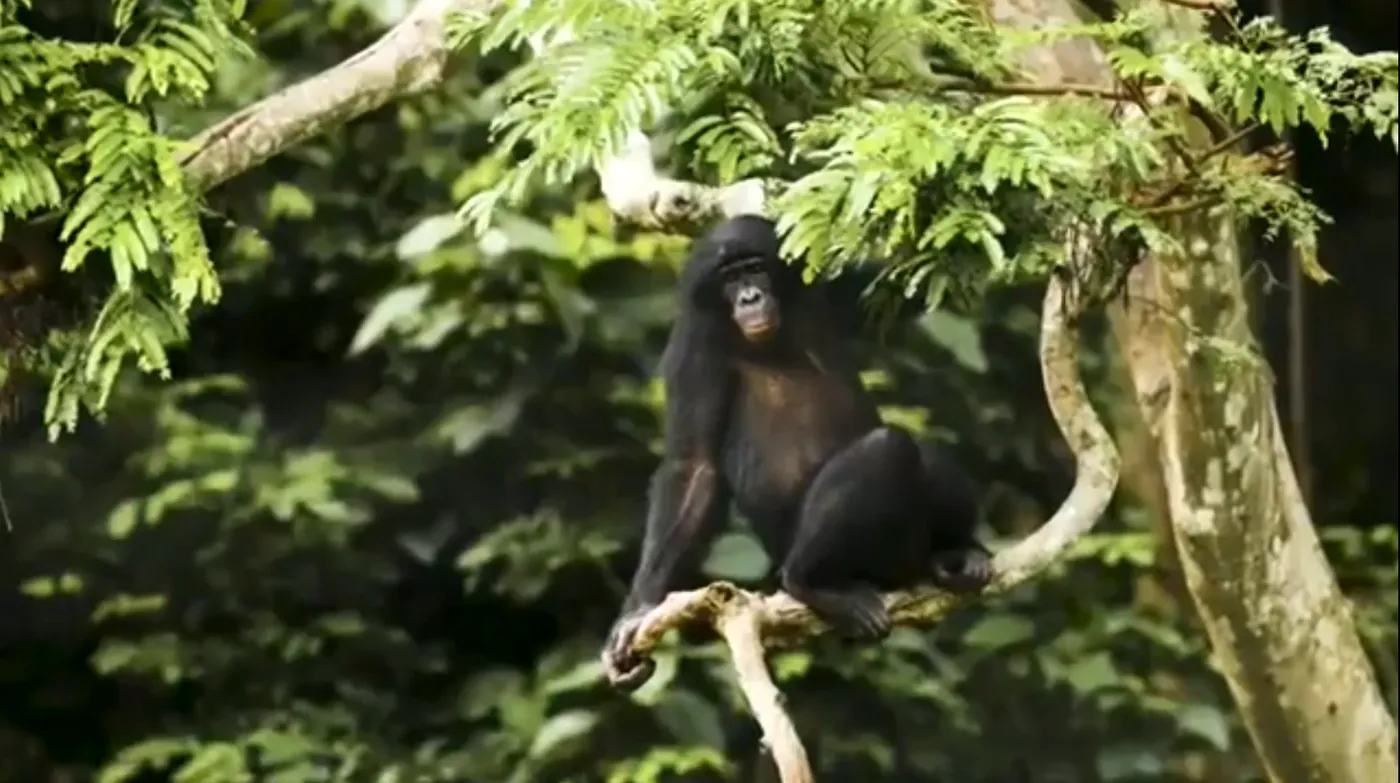
Paradise for bonobos: the only sanctuary in the world for orphaned bonobos, in the forested hills outside Kinshasa.
Home / Discover Congo / Lola ya Bonobo
Best for
Wildlife, conservation, families
Fly into
Kinshasa · FIH
Open
Tuesday to Sunday
Suggested time
Half a day
Thirty kilometres from the centre of Kinshasa, a 30-hectare patch of protected forest is home to bonobos that were taken from the wild as babies and rescued from the illegal bushmeat and pet trades. Lola ya Bonobo, which means "paradise for bonobos" in Lingala, is where they are raised, healed and, for some, prepared to return to the forest.
It is the only sanctuary in the world dedicated exclusively to orphaned bonobos, and bonobos live nowhere else on Earth except the Democratic Republic of the Congo. This guide explains what the sanctuary is, why it matters, how rehabilitation works step by step, and how to plan a visit.
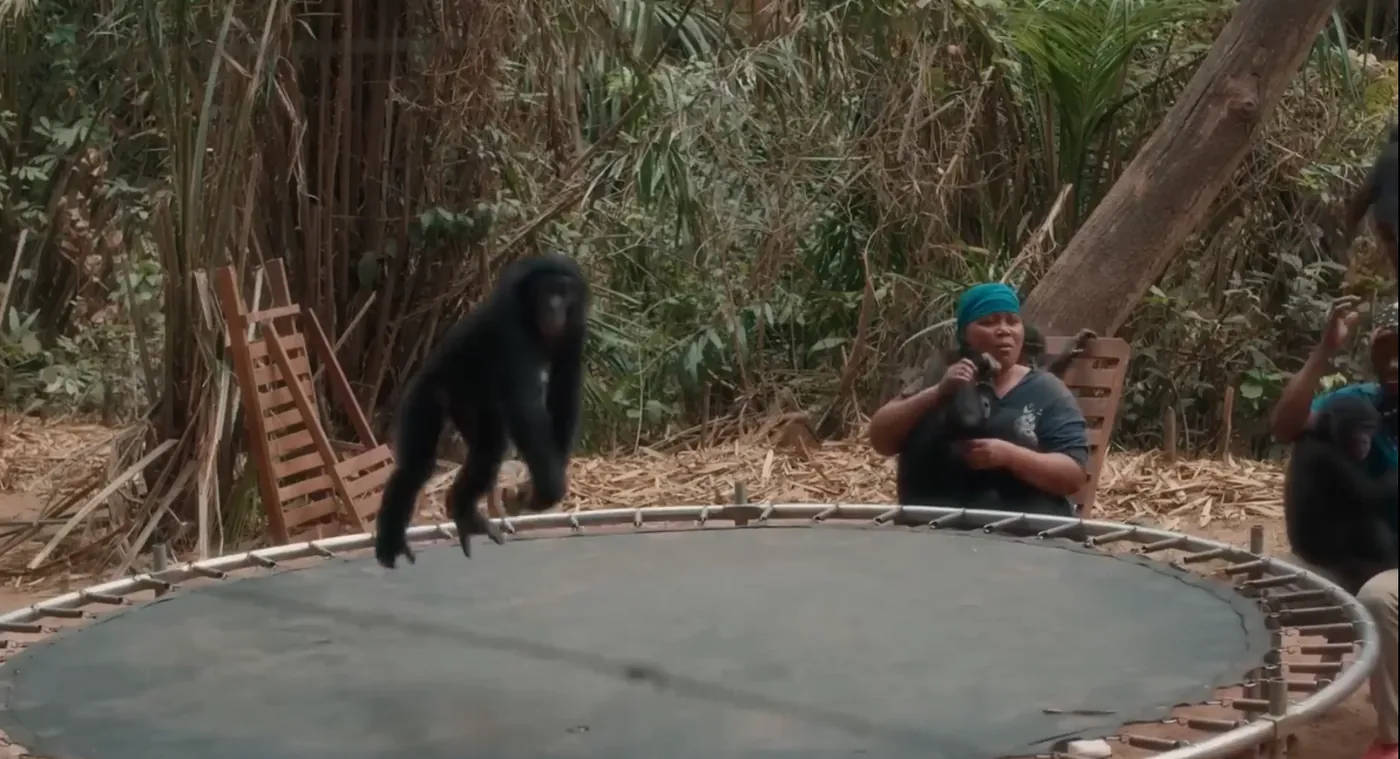
What Lola ya Bonobo is
A rescue centre, a classroom and a forest refuge in one place.
Lola ya Bonobo is run by the Congolese non-profit Les Amis des Bonobos du Congo (ABC), founded in 1994 by Belgian-born conservationist Claudine André. The idea began when orphaned bonobos started turning up for sale on the streets of Kinshasa. The sanctuary has been at its present site, beside the Petites Chutes de la Lukaya waterfalls just south of the Kimwenza suburb, since 2002.
The numbers inside the fence change as new orphans arrive and groups move on. Published figures have ranged from 52 bonobos in 2007 to more than 70 by 2017. Alongside the animal care, the sanctuary educates large numbers of Congolese visitors, including schoolchildren, about the bonobo as part of the country's own natural heritage.
| At a glance | Details |
|---|---|
| Name | Lola ya Bonobo ("paradise for bonobos" in Lingala) |
| Location | About 30 km from central Kinshasa, Democratic Republic of the Congo |
| Protected area | 30 hectares of forest |
| Species | Bonobo (Pan paniscus), listed as Endangered |
| Wild range | Only the central basin of the DRC, in lowland forest south of the Congo River |
| Threats addressed | Illegal bushmeat trade and the pet trade |
| Method | Surrogate human mothers give orphans daily affection and care, then groups are integrated and some are released |
Why bonobos need a sanctuary
One country, one forest block, a shrinking range.
Bonobos are found only in the Democratic Republic of the Congo. The Congo River separates them from chimpanzees and gorillas, and their whole range is an island-like block of forest south of the river, roughly a fifth of the country. They were not recognised as a species separate from chimpanzees until the 1930s, which makes them the last of the great apes to be described scientifically.
The IUCN Red List classifies the bonobo as Endangered. Nobody knows exactly how many remain, because only about 30% of the historic range has ever been surveyed. Estimates suggest a minimum of 15,000 to 20,000 animals, with the overall trend heading down. A 2013 range-wide study found that only 28% of the range was suitable bonobo habitat, and just over a quarter of that suitable habitat lay inside protected areas.
The pressures are habitat loss, a growing and moving human population, years of conflict and instability, and hunting. Bonobos are often described as trusting around people, which makes them easy to catch. Hunters kill the mothers for bushmeat and sell the infants as pets, and those infants are the orphans that end up at Lola.
Status
Endangered (IUCN)
Wild population
At least 15,000–20,000, declining
Found in
DR Congo only
| Bonobo | What to know |
|---|---|
| Size | Adult males average about 39 kg and females about 31 kg, with long limbs and black hair |
| Diet | Mostly fruit, plus leaves, shoots, seeds, flowers and other plant foods |
| Society | Strong bonds between females are central to group life |
| Lifespan | Up to about 50 years in the wild |
| Relatives | With chimpanzees, our closest living relatives |
From rescue to release: how rehabilitation works
Bonobos cannot simply be dropped back into the forest. Recovery is slow and relational.
Many orphans arrive frightened, underweight and traumatised, often after seeing their mothers killed. The sanctuary's answer is to replace what they lost, starting with a person.
Rescue and arrival
Orphans arrive after being rescued from the bushmeat and pet trades, typically as very young infants. The first priority is warmth, milk and constant care.
A surrogate human mother
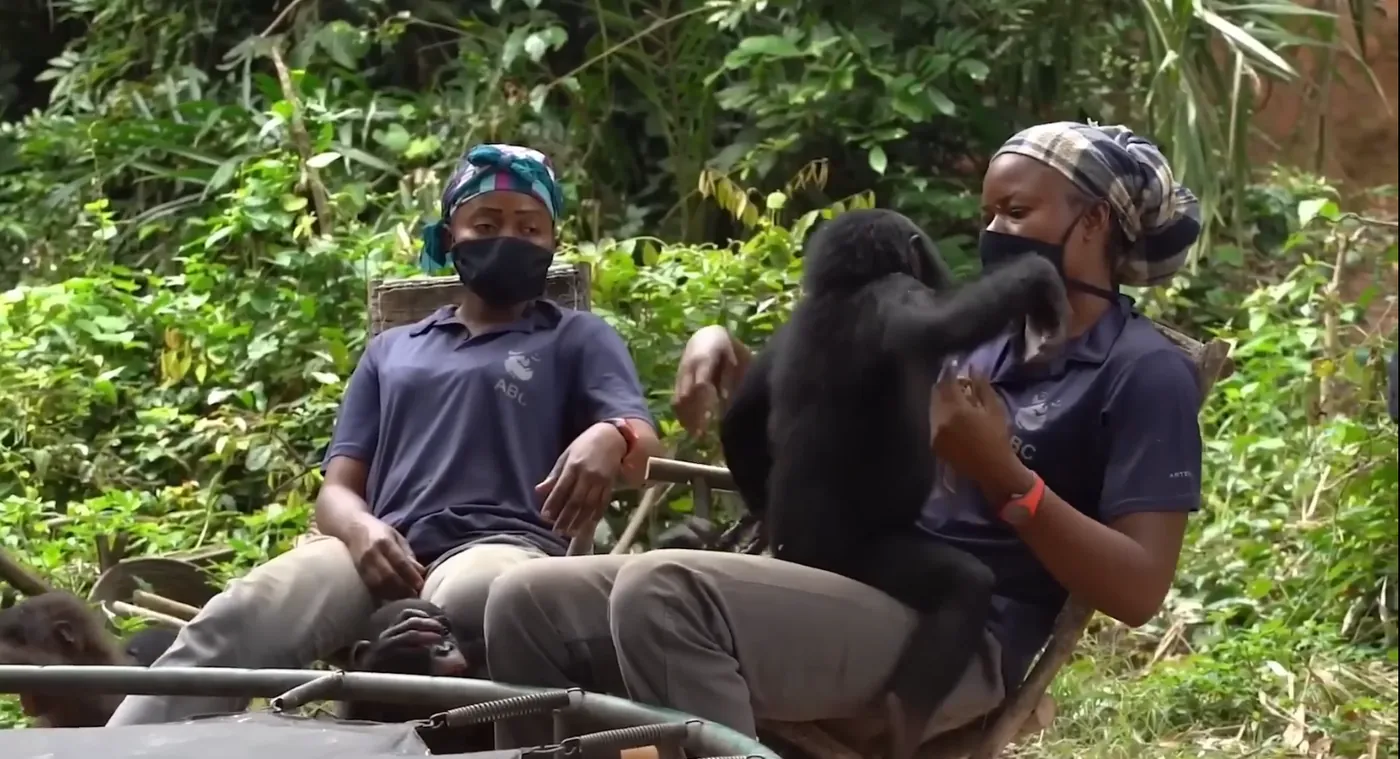
Each newcomer is assigned a human caregiver who acts as its mother. She bathes the young bonobo daily, rubs its fur with oil, feeds it from a bottle and holds it for comfort. This physical affection is what helps an infant overcome trauma and survive.
Nursery, play and learning
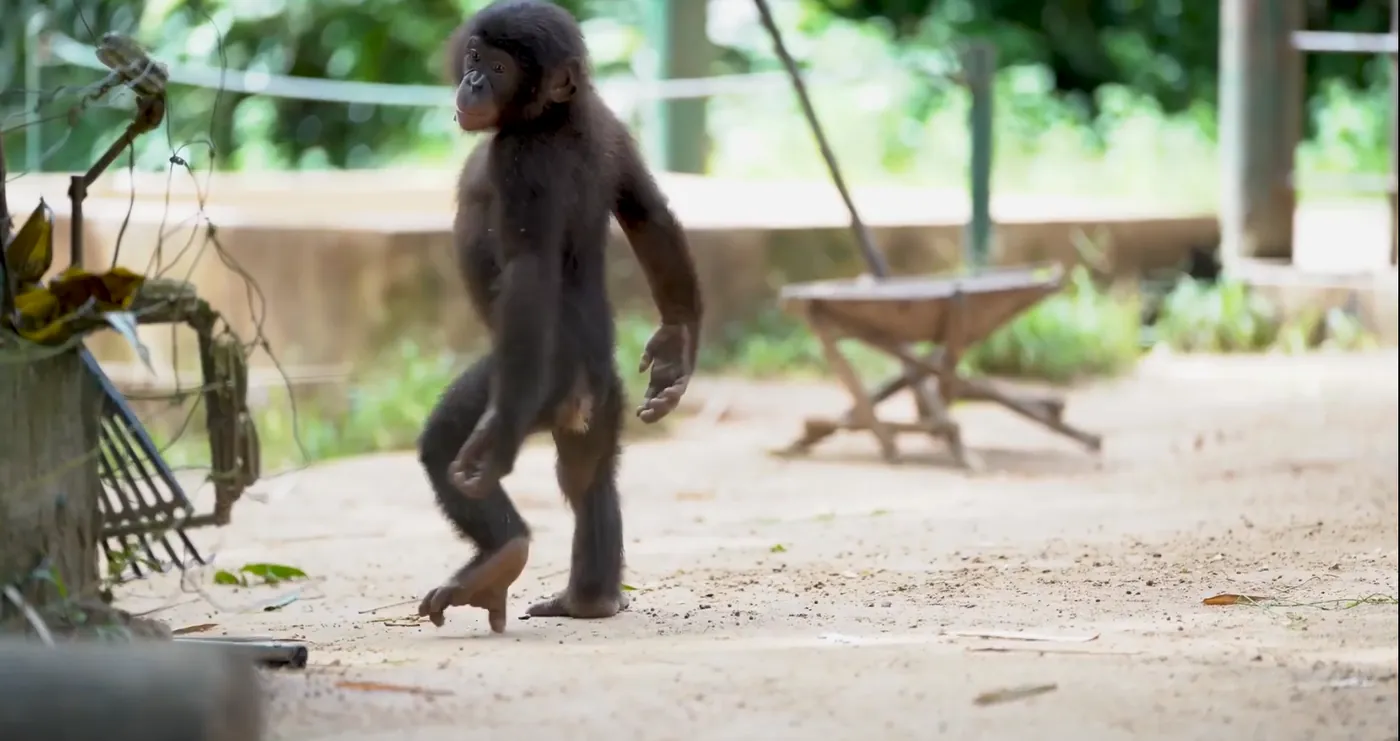
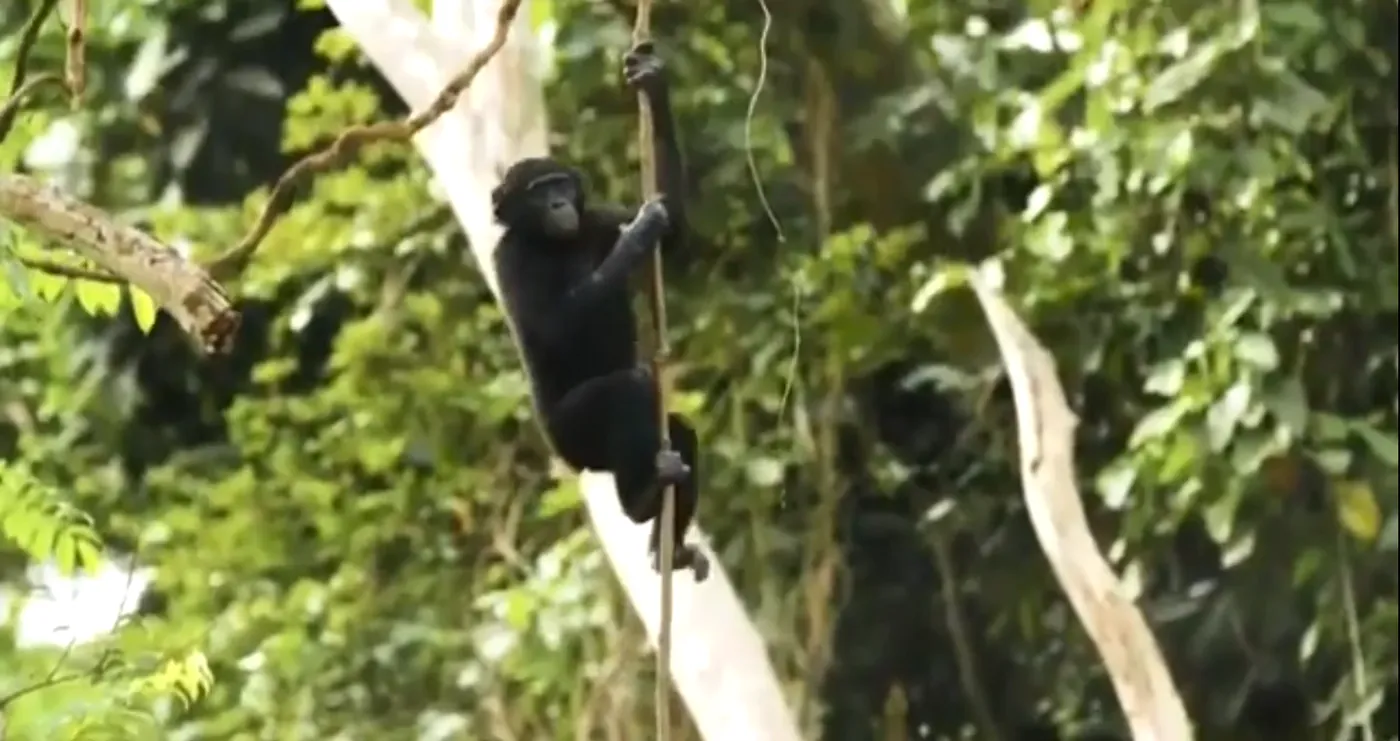
Footage from the sanctuary shows young bonobos playing, climbing and sharing food around their caregivers. Learning to be a bonobo happens among other bonobos, so this time together matters as much as feeding.
Joining a group
Caregivers keep looking after each bonobo until it is ready to join others. Integration is gradual, and building a stable troupe can take several years.
Release into protected forest
Troupes judged ready move on to Ekolo ya Bonobo ("land of the bonobos"), a protected forest in Equateur Province, far from Kinshasa, to complete their return to the wild. The first release succeeded in 2009, and the sanctuary also supports local communities there with health and school supplies.
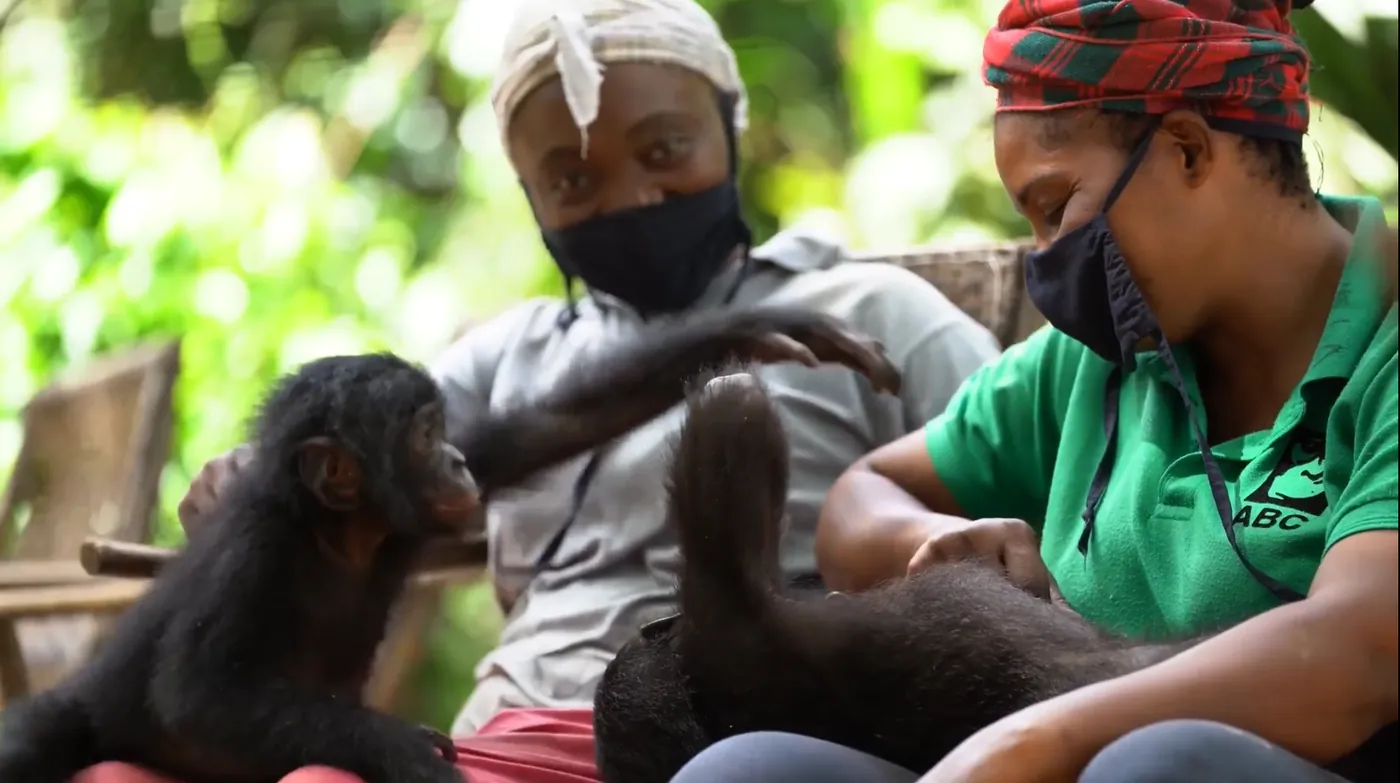
Human mothers
Caregivers talk to, hold and comfort each orphan every day.
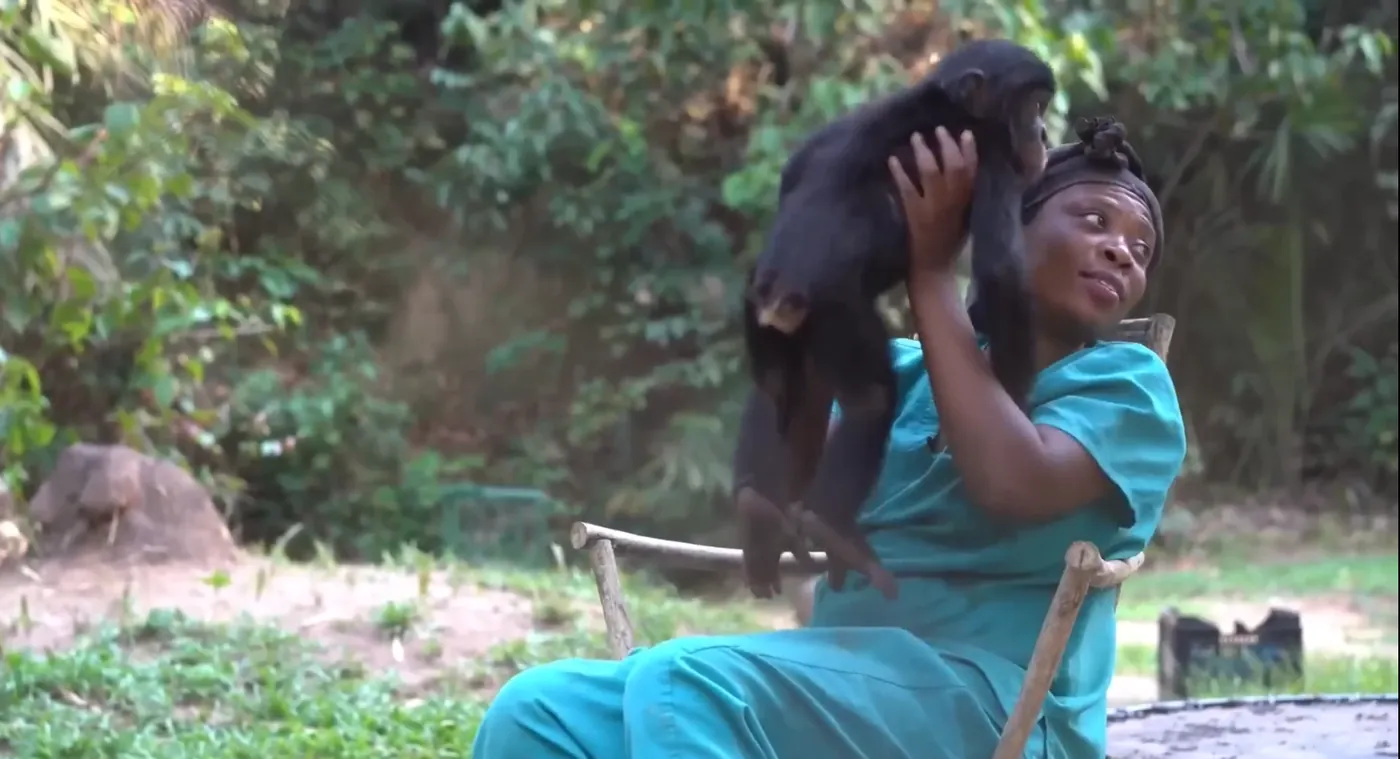
Play as therapy
Carrying, lifting and playing help young bonobos feel safe.
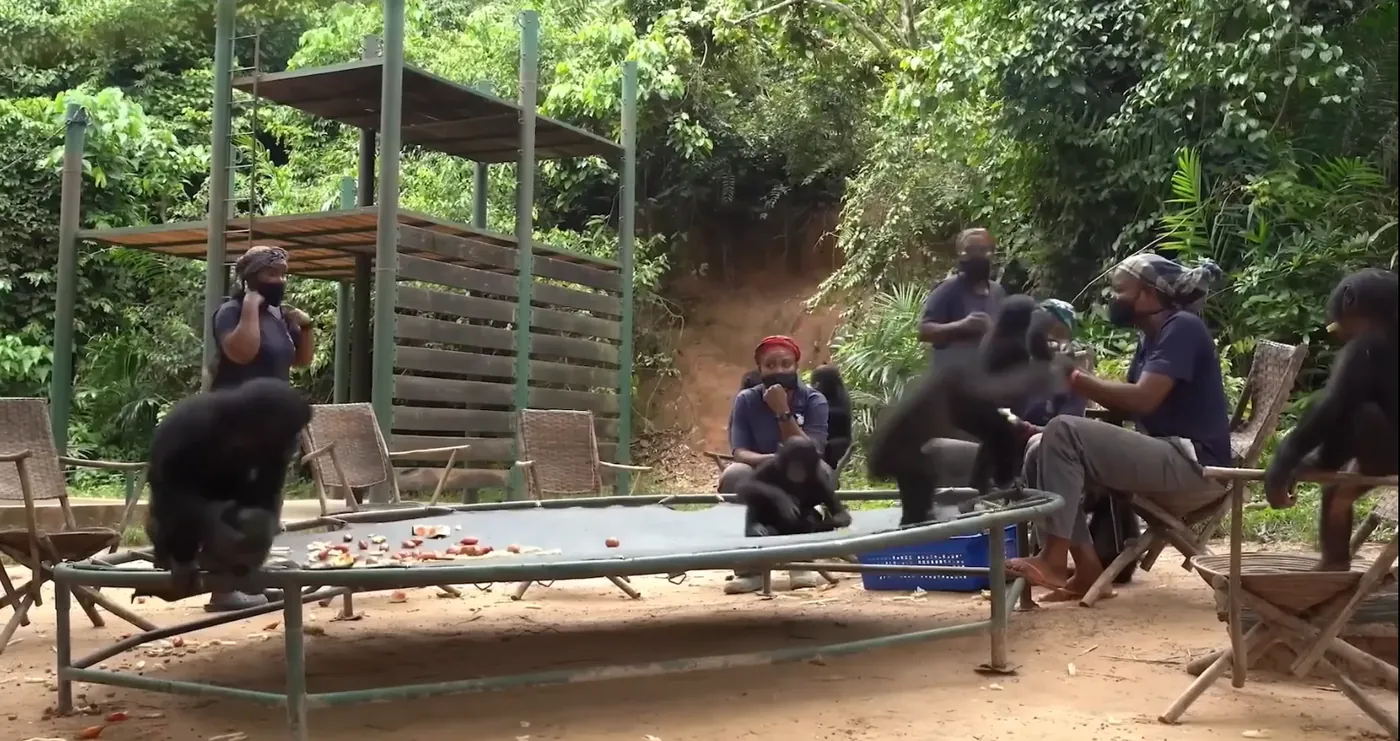
Learning together
Young bonobos share food and play with each other around their caregivers.
Life at the sanctuary
Forest, enclosures and a lot of play.
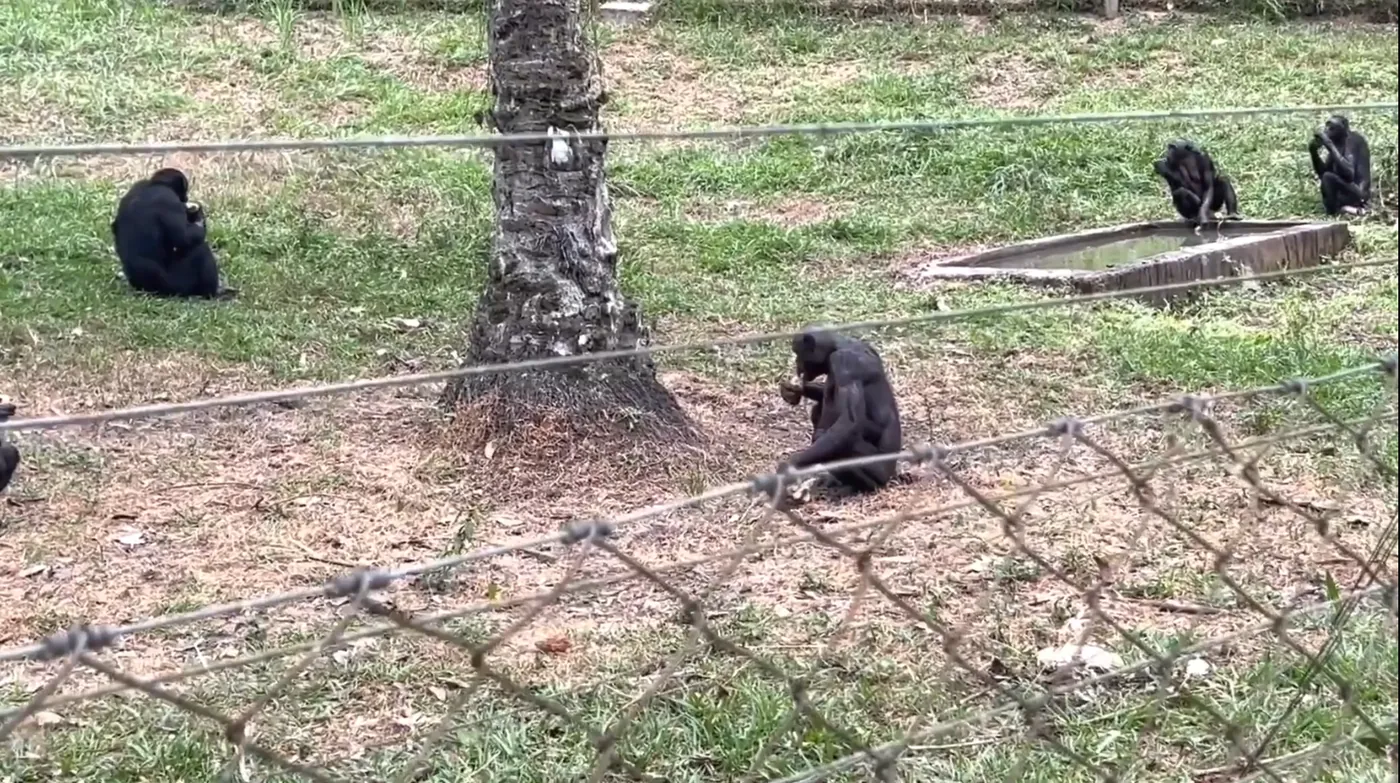
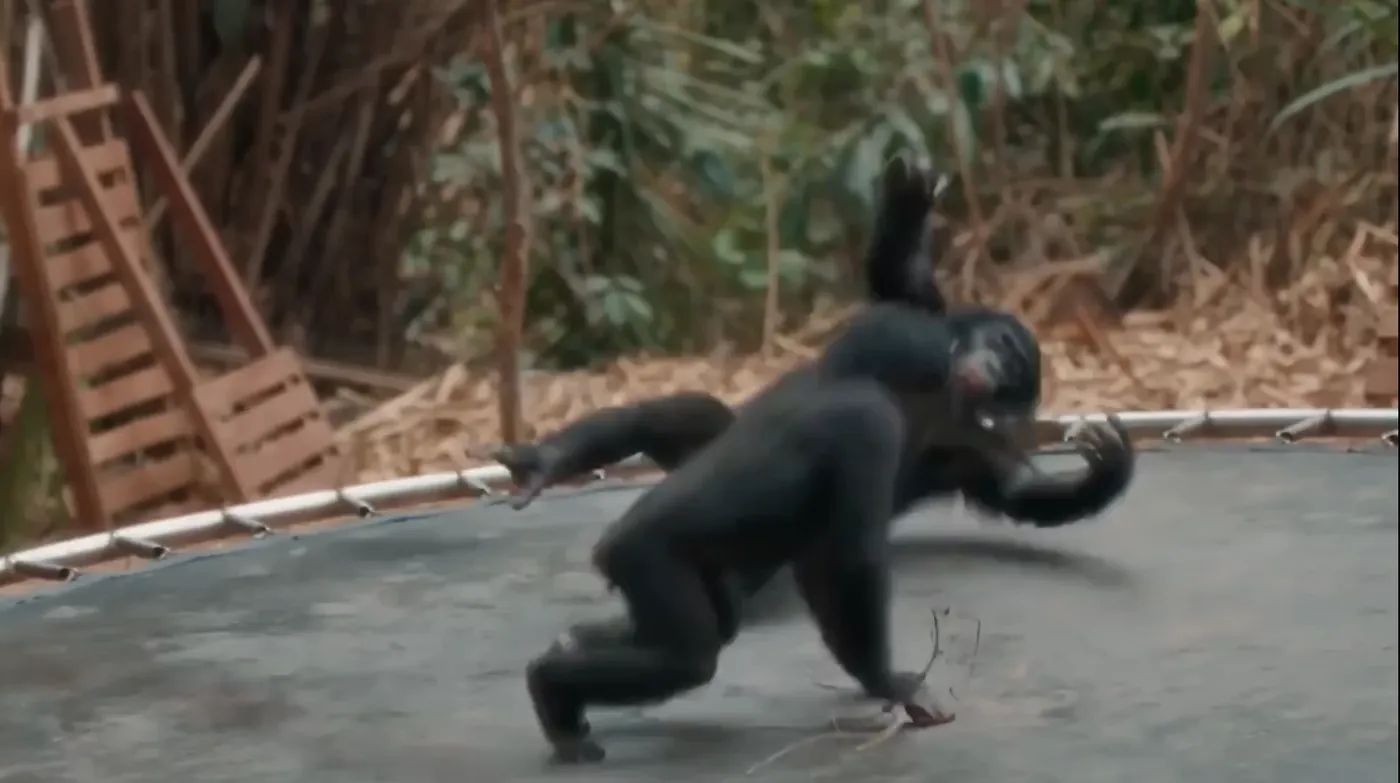
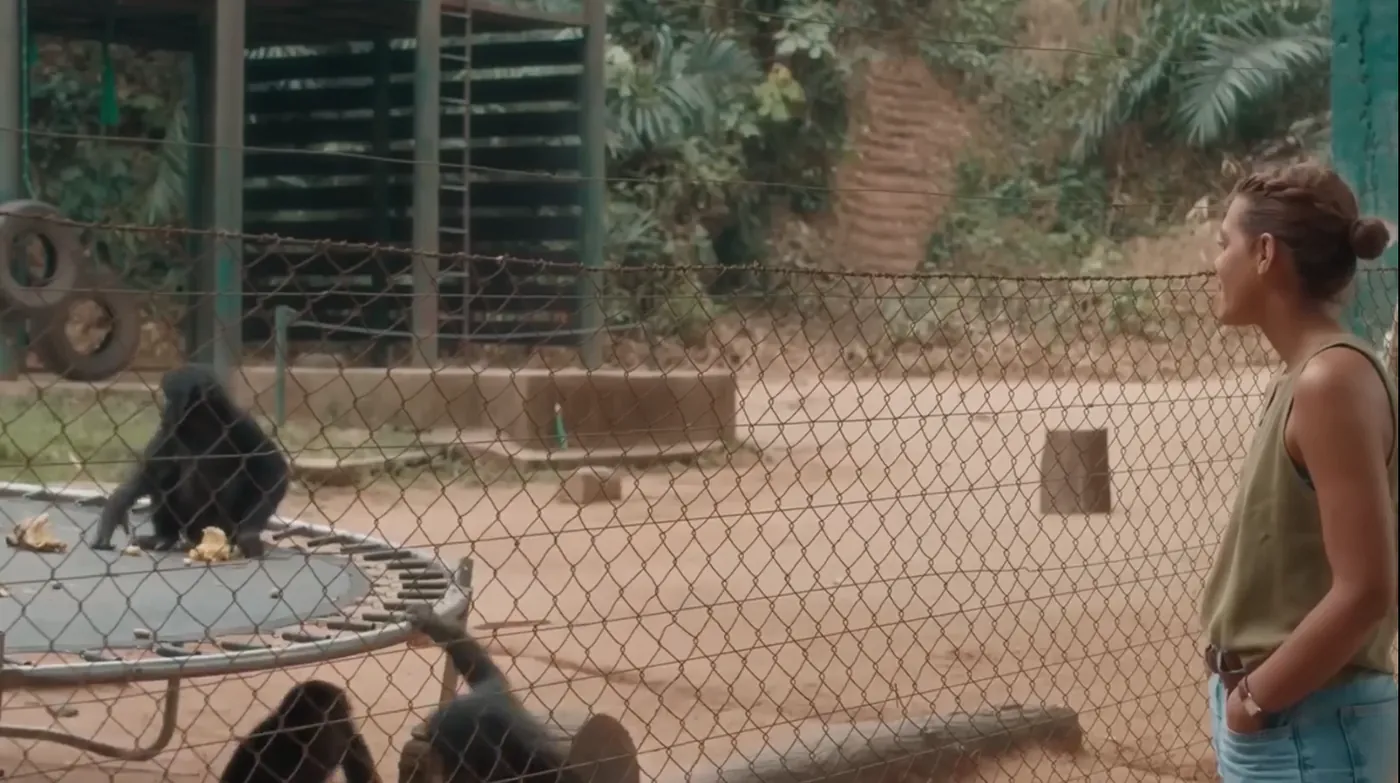
The sanctuary sits in protected forest, with wire-fenced enclosures where groups of older bonobos forage and rest. Younger bonobos spend time with caregivers in a nursery area, where climbing frames, ropes, old tyres and a large trampoline give them room to run, climb and bounce. Living in a natural environment is part of how rescued animals heal and thrive.
Watching the groups, the resemblance to people is hard to miss: sitting in pairs, handling food carefully, glancing at one another. The sanctuary's own video ends on that thought, that in a bonobo's expressive eyes we see a reflection of ourselves, and a responsibility to protect what remains.
The people behind it
A long-running Congolese effort.
Claudine André came to Congo from Belgium at a young age. After a chance meeting with a bonobo at the Kinshasa zoo, she dedicated her life to the species and built a place where orphans could be cared for properly. Today her daughter, Fanny Minesi, is general director of ABC, overseeing the sanctuary, the release site at Ekolo ya Bonobo, the education programmes and visitor services.
The caregivers who work with the bonobos every day are the heart of the programme, supported by staff that include graduates in biology and ecology from the University of Kinshasa. Lola ya Bonobo belongs to the Pan African Sanctuary Alliance, the network of primate sanctuaries across the continent. Visits and donations help fund the daily cost of feeding and caring for the animals.
Plan your visit
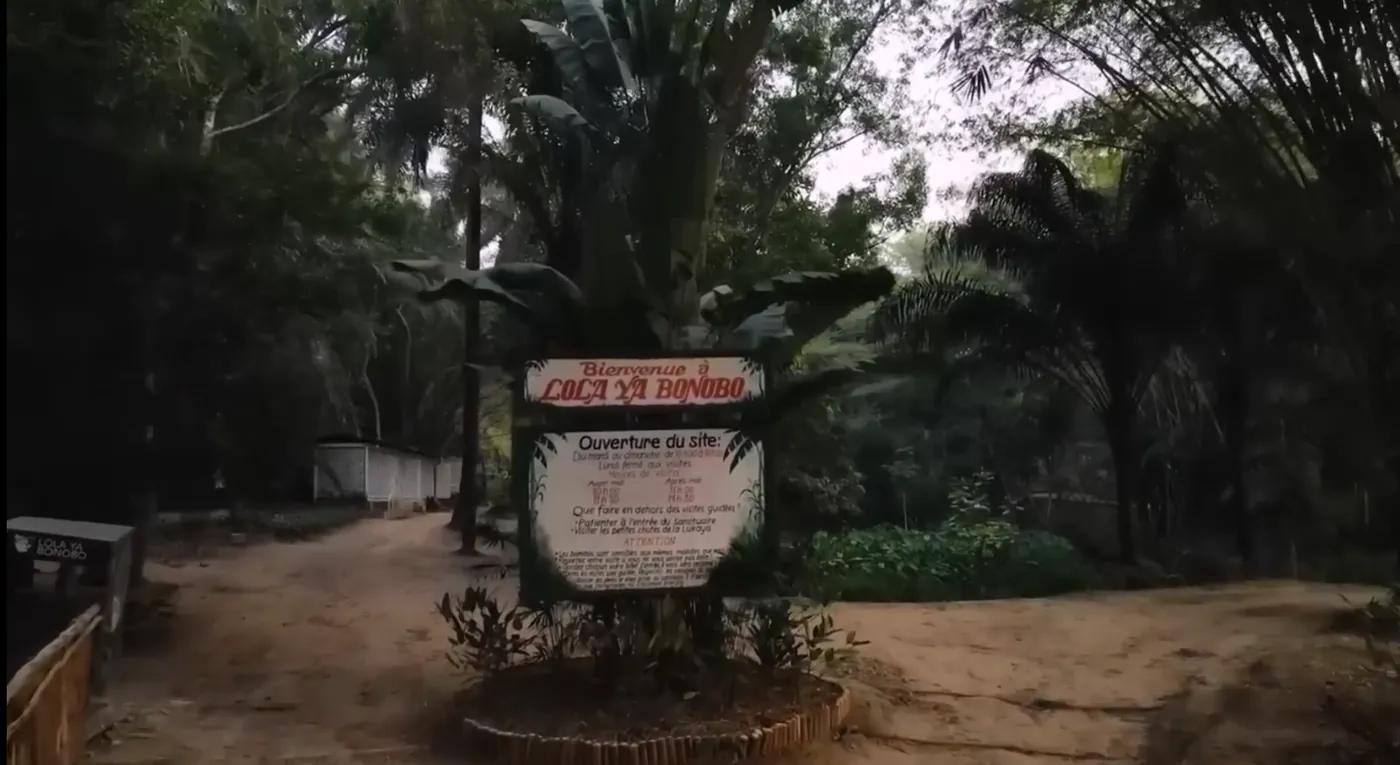
Guided tours only, with a few rules that protect the bonobos.
| Days | Tuesday to Sunday. Closed Mondays. |
| Tours | 10:00, 11:30, 13:00 and 14:30. Arrive 15 minutes early. |
| Length | About one hour on foot with a guide. The sanctuary closes at 16:00. |
| Entry | Adults $10, ages 12–17 $5, under 12 free |
| Booking | Not required for individuals and small groups. School groups should contact the sanctuary. |
| Contact | WhatsApp +243 999 381 079, or the email on the sanctuary's website |
Details are taken from the sanctuary's own visitor page, checked on 6 November 2026. Hours and prices can change, so confirm before you travel.
Getting there
The sanctuary is about 30 km (roughly 20 miles) from central Kinshasa, next to the Lukaya waterfalls in the hills south of the city. Allow time for Kinshasa traffic and set aside around three to four hours in total. The sanctuary can arrange round-trip transport from central Kinshasa for $150 per vehicle, which carries up to three people. Transport and lunch need to be requested at least a week ahead.
Lunch and overnight stays
A lunch package ($50 per person) includes a meal, two drinks and entry. For a longer visit, a small eco-lodge offers overnight stays with a private tour and the chance to join a caregiver at feeding time. Space is limited, so email the sanctuary with your dates and party size to ask about rates.
Airport
Kinshasa · FIH
From the city
About 30 km
Entry (adult)
$10
Frequently asked questions
What does Lola ya Bonobo mean?
It means "paradise for bonobos" in Lingala, the main language of Kinshasa. It is both the sanctuary's name and the name people use for the organisation behind it.
Where do bonobos live in the wild?
Only in the Democratic Republic of the Congo, in the humid lowland forests south of the Congo River. They do not occur naturally in any other country.
Can you touch or hold the bonobos?
No. Visitors keep their distance. Bonobos can catch human illnesses, and the sanctuary's orphans do best with limited human contact, so only trained caregivers handle them.
When is Lola ya Bonobo open?
Day visits run Tuesday to Sunday, with guided tours at 10:00, 11:30, 13:00 and 14:30. The sanctuary is closed on Mondays. Check with the sanctuary before you travel, because schedules can change.
How much does it cost?
The sanctuary lists $10 for adults, $5 for ages 12 to 17, and free entry for children under 12. Lunch ($50 per person) and round-trip transport from central Kinshasa ($150 per vehicle) are optional extras that need booking about a week ahead.
Are bonobos the same as chimpanzees?
No. They are separate species in the same genus, Pan. Bonobos are found only south of the Congo River and are known for societies in which strong bonds among females play a central role.
Are the bonobos ever returned to the wild?
Yes, some are. Groups judged ready are moved to Ekolo ya Bonobo, a protected forest in Equateur Province, to complete their return to the wild. The first release succeeded in 2009.
Sources and further reading
- Friends of Bonobos: Visit Lola ya Bonobo Sanctuary (hours, prices, visitor rules)
- Mongabay: Conservation lessons from the bonobos (surrogate mothers, group integration, release)
- IUCN A.P.E.S. wiki: Bonobo (range, status, population estimate)
- San Diego Zoo Wildlife Alliance: Bonobo fact sheet (size, status)
- ScienceDaily: Bonobo range assessment, 2013 (suitable habitat and protection)
- Wikipedia: Lola ya Bonobo and PASA: Claudine André (history, site, leadership)
Photos: stills from the Karibu Congo video Top 12 Places to visit in Kinshasa, Congo.
Get the Best Deals First
Weekly flight and travel deals, straight to your inbox. No spam, just savings.